Anúncios
You’ll face interviews that mix video calls, AI screening, and live conversation—so prepare across skills, technology, and company fit. Focus on clear examples of your impact, rehearse concise answers, and verify your tech and background research so you present confidently and accurately.

Expect to sharpen both what you say and how you show it: craft STAR-style stories, optimize your LinkedIn and portfolio for quick verification, and simulate virtual interviews to fix timing and eye contact. You’ll also learn how to use AI tools to refine answers and gather company insights without relying on them for final wording.
Before any meeting, confirm the platform, test your equipment, and assemble a one-page note with key metrics and questions. Those small, practical steps reduce friction and let your skills take center stage.
Understanding the Modern Job Interview

You will encounter faster timelines, more measurable skills checks, and deeper use of automated tools. Expect interviews that test specific outcomes, evaluate behavior with data, and incorporate remote and asynchronous formats.
2026 Hiring Trends and Expectations
Hiring teams now prioritize measurable impact over generic qualifications. Employers look for quantified results on your resume (revenue generated, percentage improvement, cost savings) and concrete examples of product- or project-level ownership. Behavioral questions often require short anecdotes tied to metrics and clear outcomes.
Diversity, equity, and inclusion metrics influence decision-making; you may be asked how your work improved team performance or accessibility. Hiring cycles are shorter for in-demand roles, so respond quickly to scheduling requests and pre-interview tasks.
Companies increasingly use competency frameworks. Prepare to map your experience to specific competencies listed in job descriptions, and have concise STAR-style stories ready that include Situation, Task, Action, and measurable Result.
Types of Interviews in 2026
Expect a mix of formats: quick screening calls, structured panel interviews, technical take-home assessments, and recorded asynchronous interviews. Each serves a distinct purpose: screeners check fit and logistics, panels evaluate cross-functional alignment, take-homes test real work skills, and asynchronous clips let multiple reviewers score you on the same prompts.
Virtual whiteboards and pair-programming sessions appear for engineering roles. Design and product roles use portfolio walkthroughs with critique prompts. For senior roles, anticipate scenario-based simulations that mimic strategy, budgeting, or stakeholder negotiations.
Prepare for multi-stage processes that combine short automated assessments with deeper human-led interviews. Know which stage tests which skill, and tailor your prep accordingly.
New Technologies Used in Interviews
Artificial intelligence filters resumes, ranks candidates, and conducts preliminary video interviews that analyze speech and facial cues. Treat these tools as another audience: use clear, concise language in cover letters and ensure your recorded responses are well-structured and time-efficient.
Virtual reality and immersive simulations test role-specific tasks for certain jobs—customer service, field operations, and ergonomics-focused roles. If a company uses VR, confirm prerequisites and practice in similar environments when possible.
Automated coding judges, plagiarism detectors, and proctoring software monitor technical and take-home tests. Use version control, document your work clearly, and follow test integrity rules. Prepare for collaborative tools (Miro, Figma, CoderPad) by practicing common tasks and sharing editable links during interviews.
Research and Preparation Strategies
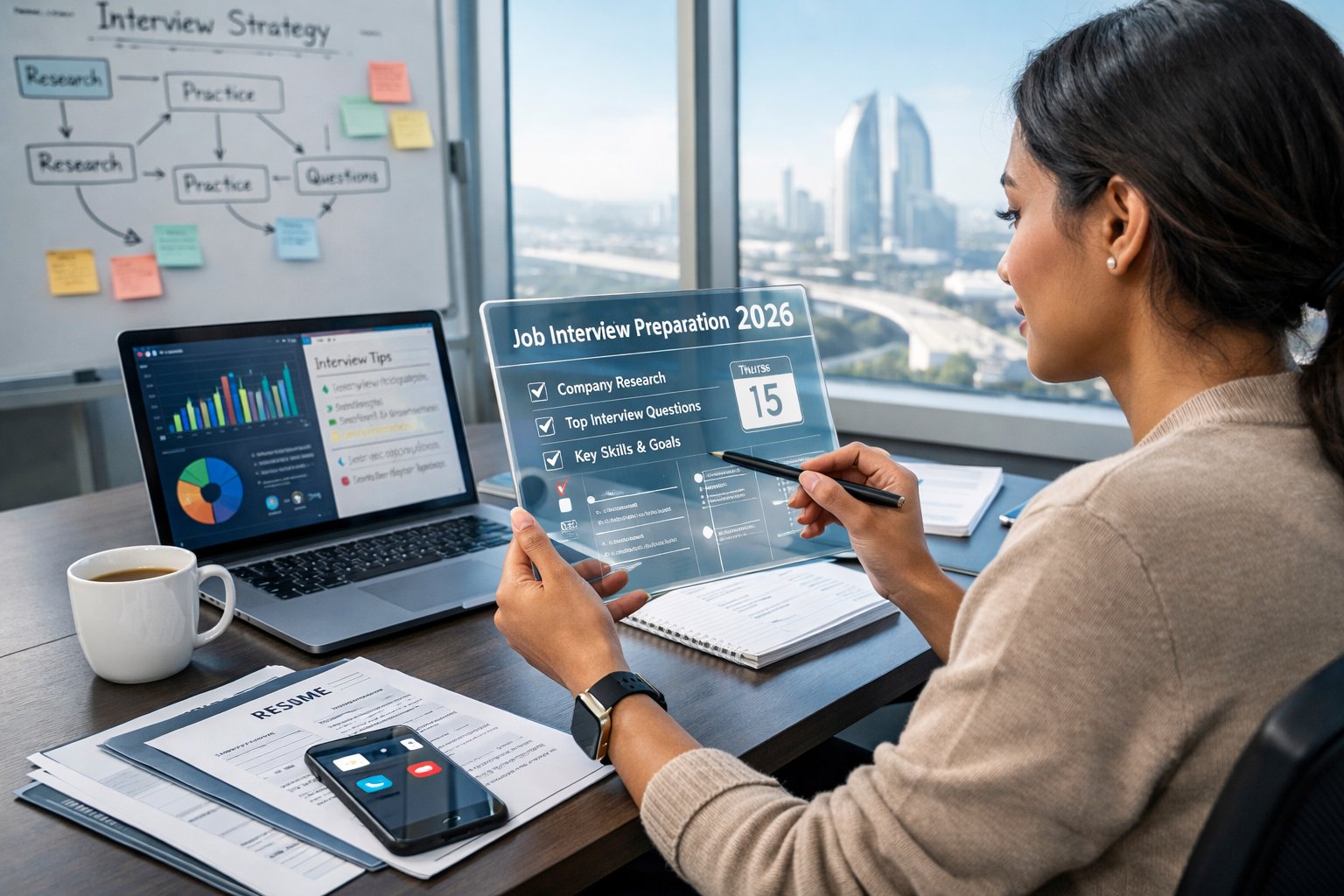
Focus on the employer’s strategy, the role’s measurable goals, and the interview format so you can tailor examples, questions, and logistics precisely.
Company and Industry Research
Identify the company’s top three priorities from its latest annual report, investor presentation, or CEO blog post. Note revenue trends, major products or services, recent funding or layoffs, and any announced strategic shifts. Bookmark authoritative sources: the company website, SEC filings (if public), Glassdoor for employee reviews, and 2–3 recent news articles.
Map competitors and at least one adjacent industry that could affect the company’s strategy. Collect metrics you can cite: market share, growth rate, or product adoption figures. Prepare 2–3 concise insights that link your experience to a company need (e.g., “I reduced churn 12% at X, which matches your 2025 retention focus”).
Job Description Analysis
Break the job post into three columns: Responsibilities, Required Skills, and Impact Metrics you can expect to own. Highlight verbs (design, lead, scale) and quantify required experience (years, headcount, budget size). Note any technology, certifications, or frameworks explicitly listed.
Translate each requirement into an evidence-based bullet for your interview: specific project, outcome, and measurement. Prepare 4–6 STAR stories matched to the highest-priority bullets. For vague items like “lead cross-functional teams,” prepare one example showing scope, stakeholders, and a measurable result.
Preparing for Remote and In-Person Formats
For remote interviews, test your camera, microphone, and lighting; choose a neutral background and disable notifications. Verify platform access (Zoom, Teams) 15 minutes early and have a backup device and phone hotspot ready. Prepare digital assets: resume PDF, portfolio links, and a one-page role-tailored summary you can share instantly.
For in-person interviews, plan route, parking, and arrival time with a 20–30 minute buffer. Bring printed copies of your resume, a notebook, and a pen. Practice handshake, eye contact, and concise verbal summaries for common questions. For both formats, prepare the same three targeted questions for the interviewer that show role knowledge and prioritize next-step impact.
Developing Effective Interview Skills
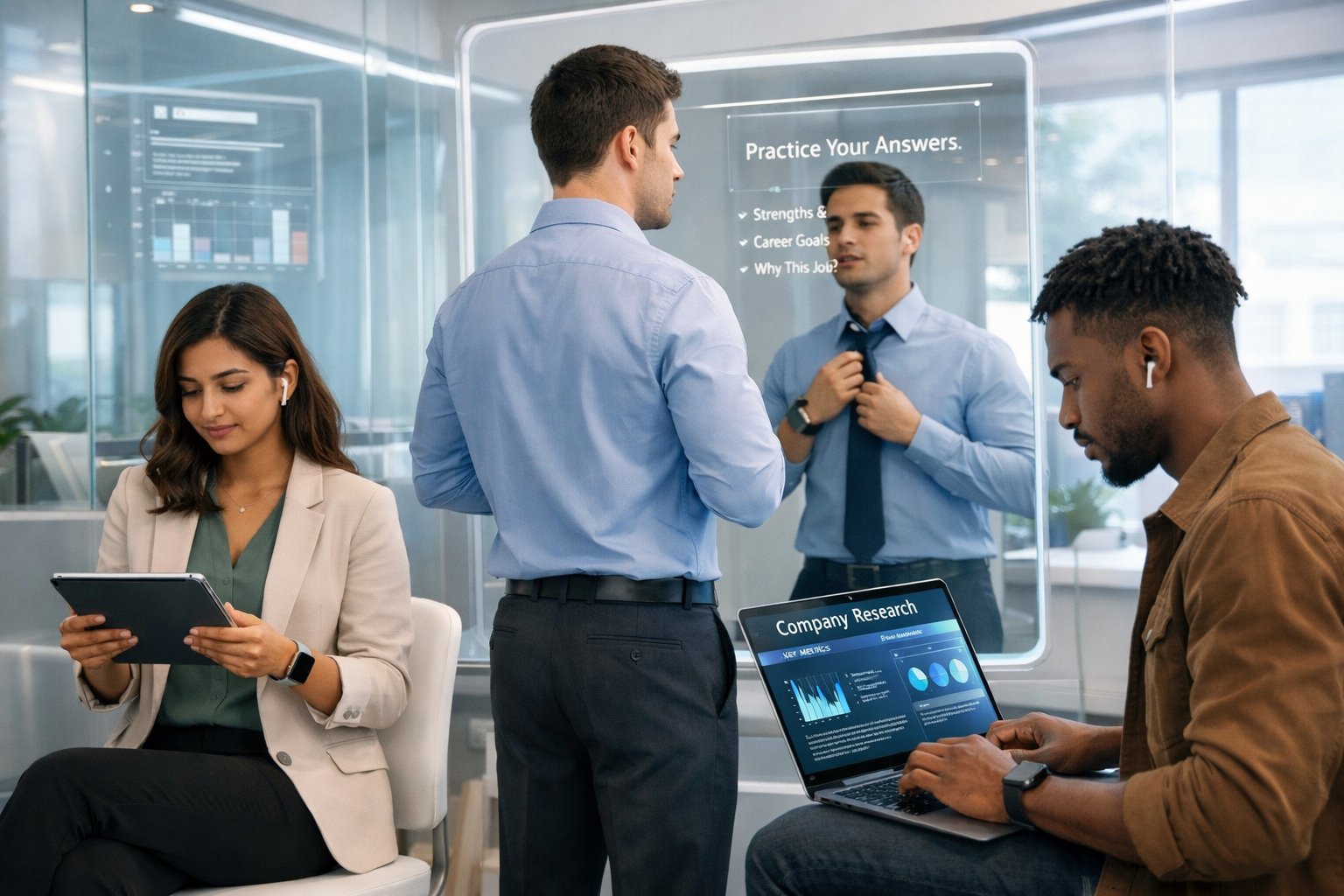
Focus on structuring specific answers, demonstrating up-to-date technical and soft skills, and using body language that reinforces credibility. Practice concise storytelling, cite measurable results, and align examples with the employer’s priorities.
Crafting Impactful Answers
Use the STAR method (Situation, Task, Action, Result) and make each element concrete. Start with one-line context, spend most time on your actions, and finish with a quantifiable result. For example: “Situation: led a 5-person data-cleaning sprint. Task: reduce pipeline errors. Action: wrote validation scripts and ran weekly checks. Result: cut errors 72% in six weeks.”
Prepare three to five reusable stories that map to common competencies: problem solving, collaboration, leadership, and adaptability. Tailor verbs and metrics to the role: “reduced,” “scaled,” “increased,” “automated,” with percentages, timeframes, headcount, or revenue figures when possible. Avoid vague adjectives; replace “improved efficiency” with “reduced processing time from 40 to 12 minutes.”
Anticipate behavioral and technical follow-ups. Practice concise transitions to answer expansion requests without digression. Use a short bridging sentence to move from story to lesson or to connect the anecdote to the hiring manager’s priorities.
Highlighting 2026-Ready Skills
List the skills employers prioritize now and show how you used them. Include specific tools, platforms, and measurable outcomes.
- Technical: cloud platforms (AWS/GCP/Azure), MLOps tools (Kubeflow, MLflow), data privacy practices (DP, encryption), low-code/no-code integration.
- Human: cross-functional collaboration, remote-team facilitation, ethical judgment, lifelong learning.
Show examples: “Led migration to GCP, reducing infra cost 30%,” or “implemented differential privacy in analytics pipeline to meet GDPR/CPRA requirements.” Mention concrete certifications only if current (e.g., 2025 AWS Certified Solutions Architect) and describe project context rather than listing credentials alone.
Demonstrate continuous learning with short evidence: recent course names, small projects, or open-source contributions. Connect skills to measurable business impact every time.
Body Language and Communication Tips
Open with a firm but natural greeting and maintain eye contact at roughly 60–70% of the conversation to show engagement without staring. Sit straight but relaxed; lean slightly forward when discussing your achievements to signal interest.
Use a clear vocal pace: 140–160 words per minute is conversational; slow down for key numbers or technical details. Pause briefly after complex statements to let the interviewer process and to invite questions. Keep hand gestures low and purposeful; avoid fidgeting.
In virtual interviews optimize camera framing (eyes about one-third from top), good lighting, and a neutral background. Mute notifications and test microphone levels. If you need time to answer, say a short buffer phrase: “Let me outline the steps I’d take,” then pause to organize your response.
Leveraging Digital Tools and AI
Use specific apps and AI to rehearse answers, polish your online profile, and manage interview logistics. Prioritize tools that provide real-time feedback, measurable improvement, and calendar integration.
Practicing with AI-Powered Mock Interviews
Use AI interview platforms (e.g., HireVue alternatives, SparkHire with AI, or specialized startups) that simulate common and role-specific questions and score your responses on clarity, relevance, and confidence. Record video responses and review AI-generated timestamps that point to filler words, long pauses, and off-topic segments.
Combine AI prompts with a human coach when possible: AI speeds repetition and objective scoring, while a coach gives industry-specific nuance and behavioral feedback. Aim for 3–5 mock sessions focused on technical tasks, STAR answers, and salary negotiation phrasing.
Track improvement with measurable metrics: average response length, filler-word frequency, and pass rate for key competency questions. Export transcripts and use them to craft concise, evidence-backed bullet points for your real interview.
Personal Branding and Online Presence
Audit your LinkedIn, GitHub, portfolio site, and Twitter/X for role-relevant content. Remove outdated projects and pin two to three recent, quantifiable accomplishments—e.g., “reduced latency by 28%” or “led a 5-person sprint to launch a feature in 6 weeks.”
Use SEO-friendly headlines and a one-line summary that includes your job title and top skills, such as “Product Manager — Mobile Payments, Fraud Reduction, A/B Testing.” Keep public code repositories tidy: include README, tests, and a short demo video or screenshots.
Leverage AI tools for copy edits and tone adjustments, but manually verify technical claims and descriptions. Schedule a quarterly review to refresh content and add new metrics from recent work.
Utilizing Scheduling and Organization Apps
Integrate calendar, task, and note apps for a single source of truth. Use Google Calendar or Outlook with color-coded events for interviews, prep sessions, and follow-ups. Connect calendar to scheduling links (Calendly, SavvyCal) to avoid back-and-forth and ensure timezone accuracy.
Manage prep tasks in a kanban or checklist app (Notion, Trello, Todoist). Create templates for role-specific prep: company research, three STAR examples, technical exercise practice, and questions to ask the interviewer.
Automate reminders and attach key documents (resume, portfolio link, company one-pager) to each calendar event. Sync across devices and enable offline access so you can rehearse or review notes without network access.
Final Steps Before the Interview
Double-check your outfit, finalize a short list of targeted questions, and confirm logistics like address, parking, and tech checks. Execute these last tasks to reduce surprises and focus on your answers and presence.
Planning Your Interview Attire
Pick a polished outfit that matches the company’s dress code. For corporate roles, choose a tailored blazer, crisp shirt or blouse, neutral trousers or skirt, and leather shoes. For startups or creative roles, select neat smart-casual pieces: a collared shirt or blouse, dark jeans or chinos, and clean shoes.
Prepare two complete outfits the night before in case of spills or weather. Check for lint, missing buttons, and polished shoes. Pack a small emergency kit: safety pins, stain stick, breath mints, and a lint roller.
Consider on-camera appearance if a video round is possible. Test how colors and patterns look on camera; avoid small stripes or overly bright colors that can distort on video.
Preparing Questions for Interviewers
Write 6–8 concise questions that show industry knowledge and role fit. Prioritize questions on immediate responsibilities, success metrics, team structure, and 90-day priorities. Example: “What are the top three goals for this role in the first six months?”
Include 1–2 culture-fit questions focused on decision-making and feedback, such as “How does the team share feedback after projects?” Avoid generic questions like “Tell me about the company.”
Organize questions by interviewer. Put technical or role-specific questions for the hiring manager and career-path or development questions for HR. Bring questions printed or in an app so you don’t forget them under pressure.
Managing Interview Logistics
Confirm time, location, and interviewer names 24 hours before the interview. For in-person interviews, map the route, note parking or building entry procedures, and plan to arrive 15 minutes early. For video interviews, test camera, microphone, and internet speed in the exact location you’ll use.
Have backups: a charged phone, portable charger, PDF copies of your resume, and a second browser for video calls. Save the interviewer’s phone number to contact them if you’re delayed.
Prepare for identification or security checks by carrying a government ID and any required paperwork. If time zones are involved, double-check the scheduled time in your local zone and set two alarms.